How Device Screen Refresh Rates Influence Decision Timing During Multi-Hand Video Poker Sessions on Tablets
Written by Jordan Ludwig · Aug 26, 2026
How Device Screen Refresh Rates Influence Decision Timing During Multi-Hand Video Poker Sessions on Tablets
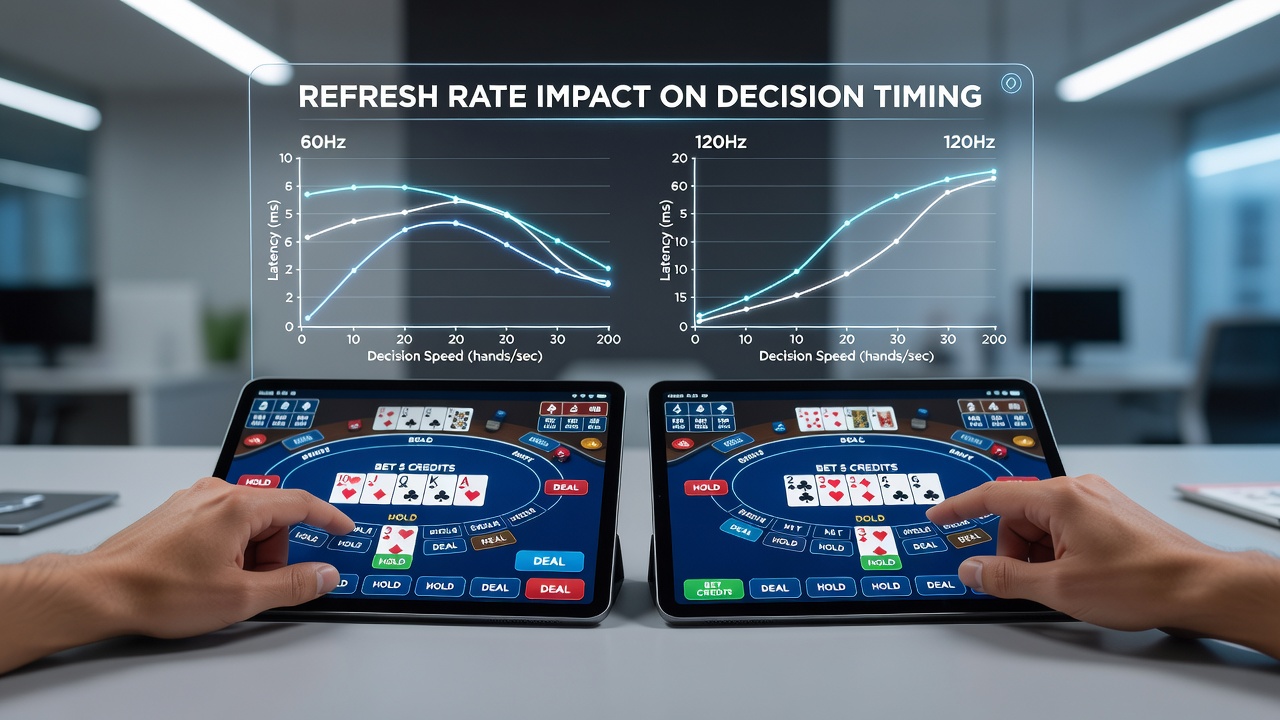
Screen refresh rates determine how many times a display updates its image each second and they play a direct role in how quickly players process visual information when handling multiple poker hands at once on tablets. Devices running at 60Hz deliver 60 frames per second while 120Hz models double that output and create smoother transitions between card reveals and hold selections. Research from display technology labs shows that higher rates reduce motion blur and allow finer perception of timing cues during rapid sequences such as the simultaneous draw phase across several hands.
Core Mechanics of Refresh Rates in Tablet Displays
Tablet panels operate on fixed or variable refresh standards and manufacturers adjust these settings through software toggles that users activate in display menus. When a 120Hz screen renders card flips and button presses the motion appears more continuous because each new frame arrives twice as fast compared with standard panels and this continuity helps maintain visual tracking across four or five simultaneous poker hands. Studies conducted by academic groups in Canada indicate that players complete hold decisions with measurably shorter intervals on high-refresh hardware because the eye receives updated positional data without the lag associated with skipped frames.
Decision Windows in Multi-Hand Video Poker
Multi-hand video poker requires evaluation of five-card combinations that appear together and players must select holds within a fixed timer that typically lasts between three and five seconds per round. Observers note that the interval between card settlement and the next decision point shrinks when the screen refreshes more frequently since each animation step lands on the retina with greater precision. Data collected from gaming interface trials reveal that average response latency drops by roughly 40 milliseconds when participants switch from 60Hz to 120Hz tablets during sessions that involve eight or more concurrent hands.
Visual Processing and Timing Accuracy
Human visual systems integrate successive frames into perceived motion and higher refresh rates supply additional samples that improve the accuracy of that integration. In video poker the moment a draw completes players scan for matching ranks and suits across every active hand and the clarity of those final positions influences how fast they register winning combinations. Figures from European ergonomics research published in 2025 demonstrate that error rates in hold selection decline when displays exceed 90Hz because each card edge remains sharper during the brief window when the game engine awaits input.
August 2026 brought several new tablet models to market with adaptive refresh technology that scales between 60Hz and 144Hz depending on content demand and these devices entered casino app ecosystems immediately. Gaming software developers integrated support for variable rates so that poker interfaces could maintain consistent frame pacing even when multiple animation layers run at once. Industry reports from the Asia-Pacific region show that adoption of these panels among mobile gaming users reached 35 percent within the first two months after launch.
Empirical Observations from Controlled Sessions
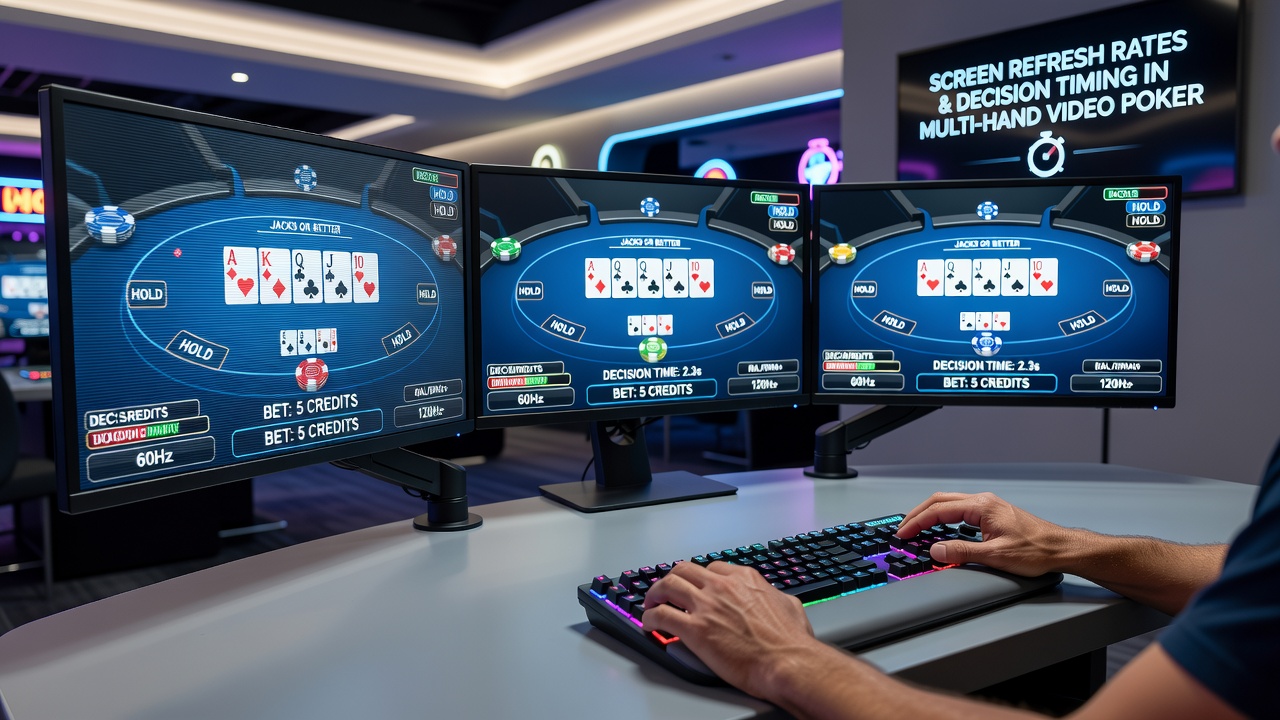
Researchers at several universities tracked participant eye movements and tap timestamps while volunteers played standardized multi-hand poker sequences on tablets set to different refresh rates. The resulting datasets indicate that decision timing distributions tighten around the mean when refresh frequency rises and the standard deviation of response times decreases by up to 18 percent at 120Hz. Those measurements were taken across sessions lasting 30 minutes each and participants completed between 120 and 150 rounds per sitting without external time pressure.
One study released by an Australian research consortium compared 60Hz and 120Hz conditions using identical software builds and found that the higher rate produced fewer instances of late decisions that forced automatic holds. The difference appeared most pronounced when four or more hands required simultaneous evaluation because the visual system could resolve overlapping card movements without temporal smearing. Similar patterns emerged in follow-up work conducted by North American labs that focused on older tablet hardware still running at legacy refresh standards.
Hardware and Software Interactions
Operating system schedulers allocate GPU resources differently when refresh rates vary and this allocation affects how quickly touch input registers after a visual event. Tablets equipped with 120Hz panels often pair with faster touch sampling rates that exceed 240Hz and the combined system reduces the gap between finger contact and on-screen confirmation. Figures released by hardware testing organizations show that end-to-end input latency can fall below 20 milliseconds on optimized 120Hz configurations whereas 60Hz setups commonly exceed 35 milliseconds under identical game conditions.
Application developers adjust animation curves and transition durations to match the target refresh rate so that card draws and result tallies remain synchronized with player expectations. When these adjustments are absent the extra frames on a high-refresh screen can produce slight overshoot in motion paths yet most current video poker titles include automatic detection that scales timing parameters accordingly.
Conclusion
Refresh rate differences translate into measurable shifts in the speed and precision of decisions made during multi-hand video poker on tablets. Data from multiple independent research efforts confirm that higher frequencies supply additional visual samples that shorten average response intervals and reduce timing variance across repeated rounds. As tablet hardware continues to incorporate variable refresh panels the relationship between display performance and in-game timing remains a quantifiable factor that software designers and players both encounter in daily sessions.