20 Jul 2026
Mapping User Navigation Behaviors Across Bonus Activation Sequences in Portable Entertainment Suites
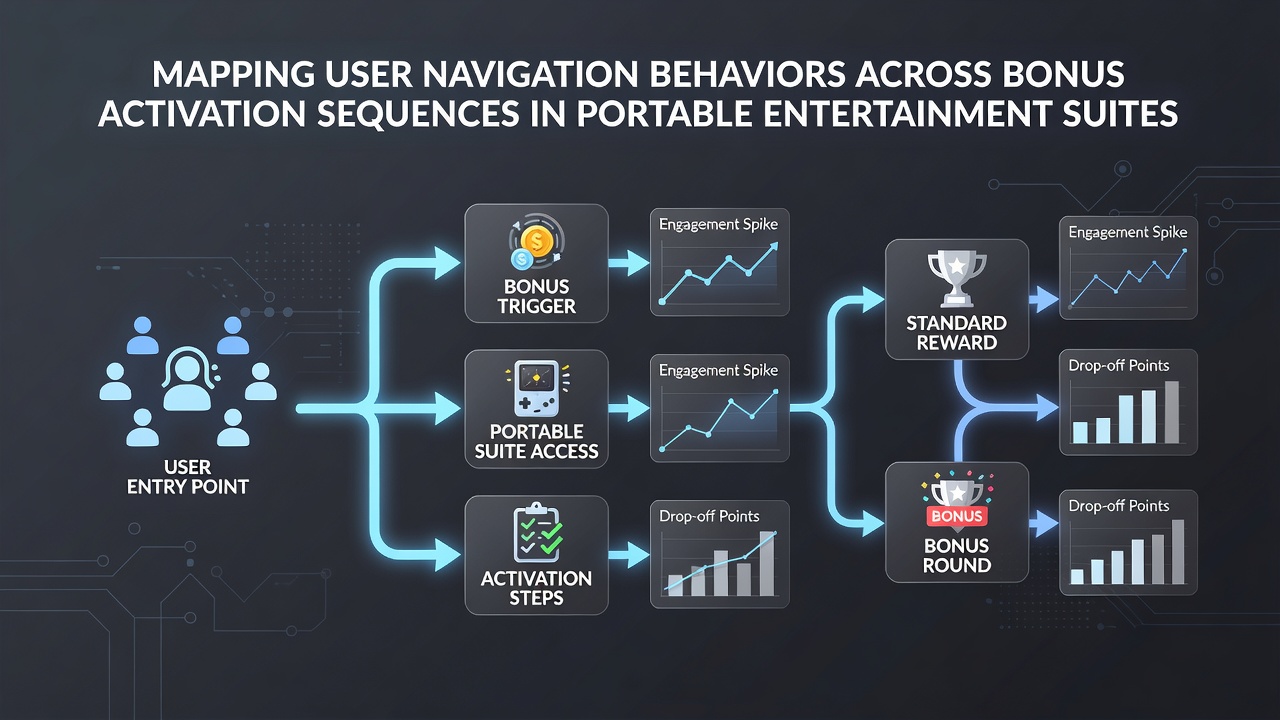
Portable entertainment suites encompass the suite of mobile applications that deliver reel spinning, card table, and live dealer experiences to handheld devices, and analysts track how players move through the layered sequences required to unlock promotional credits or free rounds. These sequences typically begin with account verification prompts, proceed through deposit interfaces, and conclude at the bonus claim button, yet navigation logs from major platforms in July 2026 reveal that a substantial share of sessions terminate before the final step is reached.
Interface Structures and Clickstream Patterns
Each suite arranges its bonus activation path differently, with some placing the claim option directly on the lobby screen while others embed it inside a multi-tab rewards center that also houses loyalty points and tournament entries. Clickstream records collected across thousands of daily sessions show that users who encounter the rewards center first spend an average of 14 seconds scanning available offers before selecting one, whereas direct lobby placements reduce that dwell time to under six seconds. Heatmap overlays generated by several platform operators indicate heavier interaction density around the deposit confirmation screen that immediately precedes the bonus trigger, suggesting that payment method selection functions as the critical decision node in the sequence.
Regional Data Sets from Mid-2026
Reports issued by the Nevada Gaming Control Board document mobile bonus activation volumes for the first half of 2026, noting that activation completion rates climbed 9 percent compared with the same period in 2025. Parallel figures compiled by the Alcohol and Gaming Commission of Ontario indicate that Ontario-licensed applications recorded a 7 percent increase in completed sequences during the same window, with the largest gains appearing in sessions that originated from tablet devices rather than smartphones. Researchers at the University of Nevada, Las Vegas examined anonymized navigation logs supplied by three major operators and identified a recurring pattern: users who activate bonuses via a one-tap deep link embedded in push notifications complete the process in fewer steps than those who navigate manually from the home screen.
Sequence Variations Across Game Categories
Reel-based titles within portable suites often route players through an additional animation layer that displays spinning reels before the bonus credit balance appears, adding between three and five seconds to the activation timeline. Card table environments, by contrast, present the bonus as an overlay that can be dismissed or accepted without leaving the current table view. Session data aggregated in July 2026 indicate that the overlay format produces higher immediate activation rates yet lower subsequent retention into actual gameplay, while the animation route correlates with longer overall session durations once the bonus is live. Observers note that these differences persist across both iOS and Android builds, although Android sessions exhibit slightly higher rates of mid-sequence abandonment when the animation exceeds four seconds.
Measurement Tools and Analytical Approaches
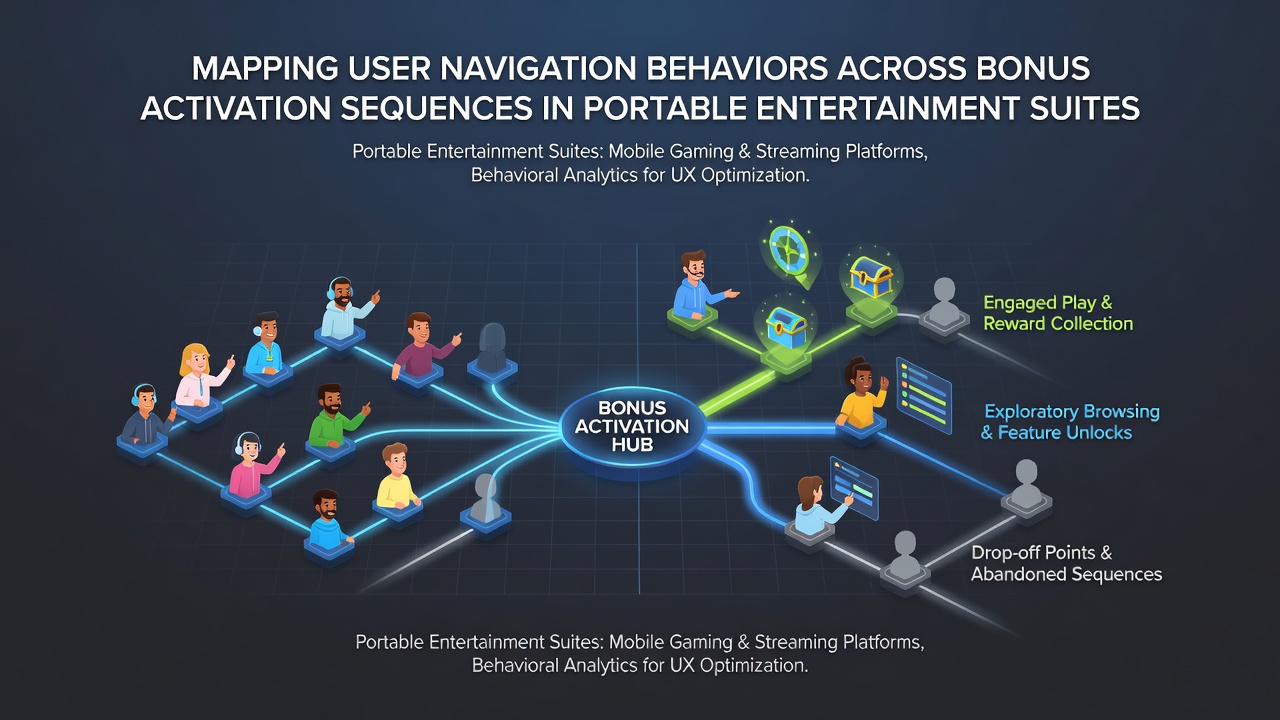
Platform teams rely on a combination of session replay software, funnel visualization dashboards, and A/B testing frameworks to map navigation behaviors. One operator that tested three different placements for the bonus claim button found that positioning it at the bottom navigation bar increased completion rates by 11 percent relative to a top-right floating button. Another study segmented users by time of day and discovered that evening sessions, defined as those beginning after 8 p.m. local time, display longer dwell times on the deposit screen yet comparable activation rates once the user reaches the final claim step. These segmented findings allow designers to adjust prompt timing and button prominence without altering the underlying bonus mechanics.
Cross-Device Continuity and Sequence Interruptions
Many users begin a bonus activation sequence on a smartphone during a commute and attempt to finish it later on a tablet at home. Logs show that 18 percent of such cross-device attempts in the first half of 2026 encountered state synchronization delays that forced the user to restart the deposit portion of the flow. Operators that implemented real-time cloud saves for pending bonus states reduced restart frequency to 4 percent. The same data sets reveal that interruptions caused by incoming calls or app switches account for roughly one quarter of all abandoned sequences, with the highest concentration occurring between the deposit confirmation and the final claim click.
Conclusion
Navigation mapping continues to supply platform operators with precise metrics on where users pause, backtrack, or exit during bonus activation sequences. The patterns documented through July 2026 demonstrate consistent differences by device type, game category, and time of day, while also highlighting the measurable impact of interface adjustments such as button placement and state persistence across devices. As additional operators adopt unified analytics standards, the resulting data sets are expected to support further refinements in how portable entertainment suites present and deliver promotional content.