8 Jun 2026
Player Migration Trends Between Digital Blackjack Variants in Regulatory Border Zones
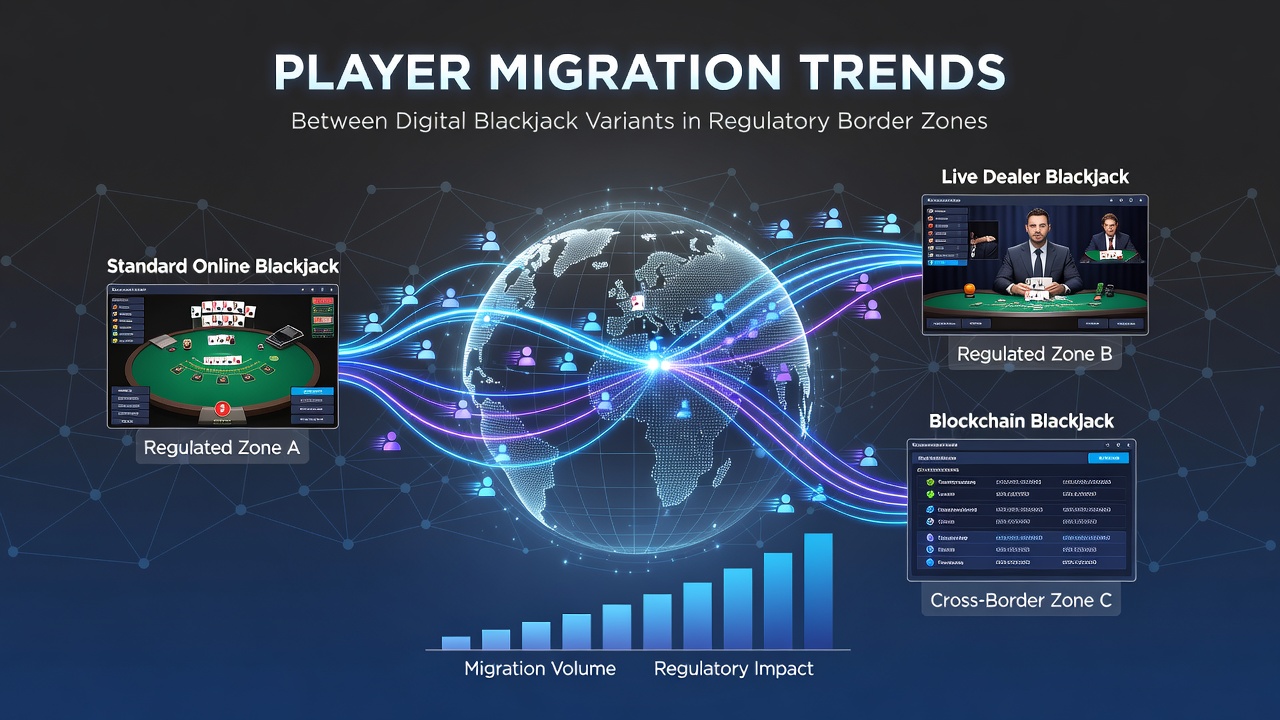
Regulatory border zones create distinct environments where online gambling rules shift sharply across state or national lines, and players respond by moving between digital blackjack platforms that offer different rule sets and payout structures. These zones often sit along boundaries such as those separating Nevada from California or New Jersey from Pennsylvania, where one jurisdiction permits certain side bets or live dealer formats while the neighboring area restricts them. Observers note that such differences encourage users to maintain multiple accounts and switch variants based on which location currently allows preferred features.
Data collected through June 2026 shows measurable flows as players seek European-style blackjack with its lower house edge or switch to American variants that include more aggressive doubling options when regulations loosen. Reports from the New Jersey Division of Gaming Enforcement indicate that cross-border activity between New Jersey and Pennsylvania accounts increased by 18 percent in the first half of the year, driven largely by players chasing specific blackjack rule tweaks unavailable in their home state.
Mapping the Zones Where Rules Diverge
Border zones function as natural laboratories because adjacent regulators apply different standards to digital blackjack. In the United States, states like Michigan and Indiana share a border yet enforce separate licensing requirements that affect which blackjack variants operators can stream. Similar patterns appear along the Canadian border with Washington state, where provincial rules permit certain RNG configurations that U.S. federal guidelines limit. European examples include the line between Malta and Italy, where Maltese licenses allow broader side-bet menus that Italian platforms exclude.
These differences matter because blackjack variants carry distinct mathematical profiles. European blackjack restricts dealer peeking on ten-value cards, while American versions permit more player decisions on soft totals. When one side of a border zone suddenly authorizes a variant with a documented 0.3 percent lower house edge, player traffic shifts within weeks as users test the new option.
Documented Migration Flows Through Mid-2026
Tracking services that monitor account logins across licensed platforms recorded consistent patterns through June 2026. Players in stricter zones logged into platforms based in looser jurisdictions at higher rates during evening hours, coinciding with live dealer table availability. One study released by the Gambling Research Exchange Ontario found that 23 percent of tracked Canadian players near the U.S. border maintained active sessions on both sides of the line during the spring months, alternating between multi-hand RNG blackjack and single-deck live dealer formats depending on which regulator permitted faster shuffle speeds.
The same report highlighted that migration spikes aligned with regulatory announcements rather than promotional campaigns. When Pennsylvania expanded its approved blackjack side bets in April 2026, neighboring New Jersey platforms experienced a measurable drop in concurrent users for those specific variants, while Pennsylvania operators saw immediate uptake. Figures from the Nevada Gaming Control Board similarly show that Las Vegas-based digital platforms gained users from California border counties after the state clarified rules on certain progressive jackpot blackjack games.
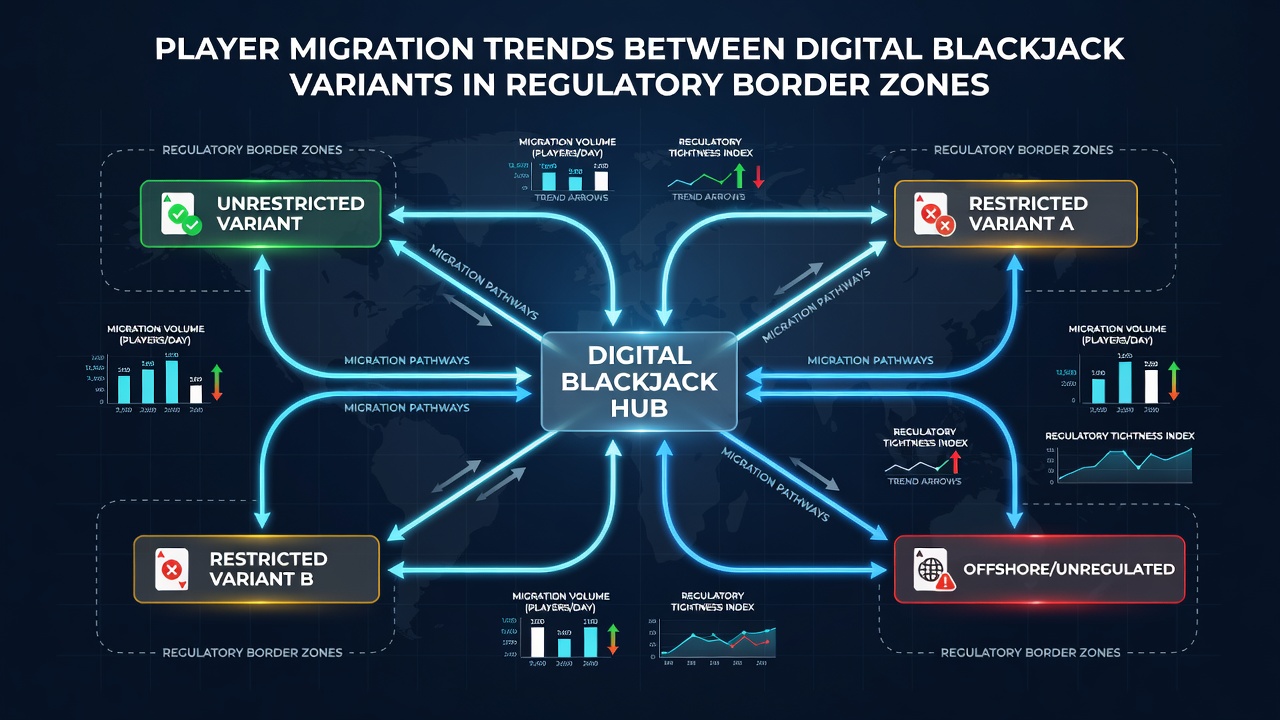
Variant-Specific Drivers Behind the Shifts
Live dealer blackjack tends to attract migration when one zone permits higher table limits or additional camera angles that improve card visibility. RNG versions draw players when regulators approve faster round pacing or lower minimum bets. Data indicates that users who prefer card counting practice often migrate toward zones that still allow continuous shuffle machines or restrict deck penetration rules, because those settings alter basic strategy charts in predictable ways.
European Gaming and Betting Association statistics released in May 2026 revealed that platforms offering hybrid variants combining live elements with RNG side bets experienced the highest retention across border zones. Players moved toward these hybrids when one jurisdiction restricted traditional live dealer features, yet the hybrid remained accessible under a different license. The pattern repeats across multiple borders, showing that variant availability, not marketing alone, dictates the direction of movement.
Operator Responses and Platform Adjustments
Operators active in multiple jurisdictions have begun adjusting blackjack variant menus in real time to capture migrating traffic. Some platforms now geo-detect user locations and surface the variant permitted in the nearest compliant zone, while others maintain separate lobbies that highlight rule differences. Those adjustments coincide with regulatory filings that must be updated whenever a neighboring authority changes its approved game list.
Payment processor data through June 2026 further shows that deposit volumes follow the same migration paths as active play sessions. Users in one zone fund accounts on platforms licensed in another, then transfer winnings back once session limits or tax reporting requirements differ. This flow creates additional compliance layers for operators who must reconcile activity across multiple regulatory frameworks simultaneously.
Conclusion
Player movement between digital blackjack variants across regulatory border zones follows measurable patterns tied directly to rule differences rather than promotional incentives. Data through June 2026 confirms that shifts occur rapidly after regulatory changes, with users selecting variants based on house edge, pacing, and side-bet availability. Operators continue to adapt menus and detection tools to retain traffic as these zones evolve, while regulatory bodies on each side of the border track the resulting activity volumes. The trends remain consistent across U.S. state lines, Canadian provincial borders, and European jurisdictions where licensing standards diverge.