15 Jul 2026
The Evolution of Avatar Customization Options in Virtual Casino Communities and Their Effect on Social Interactions
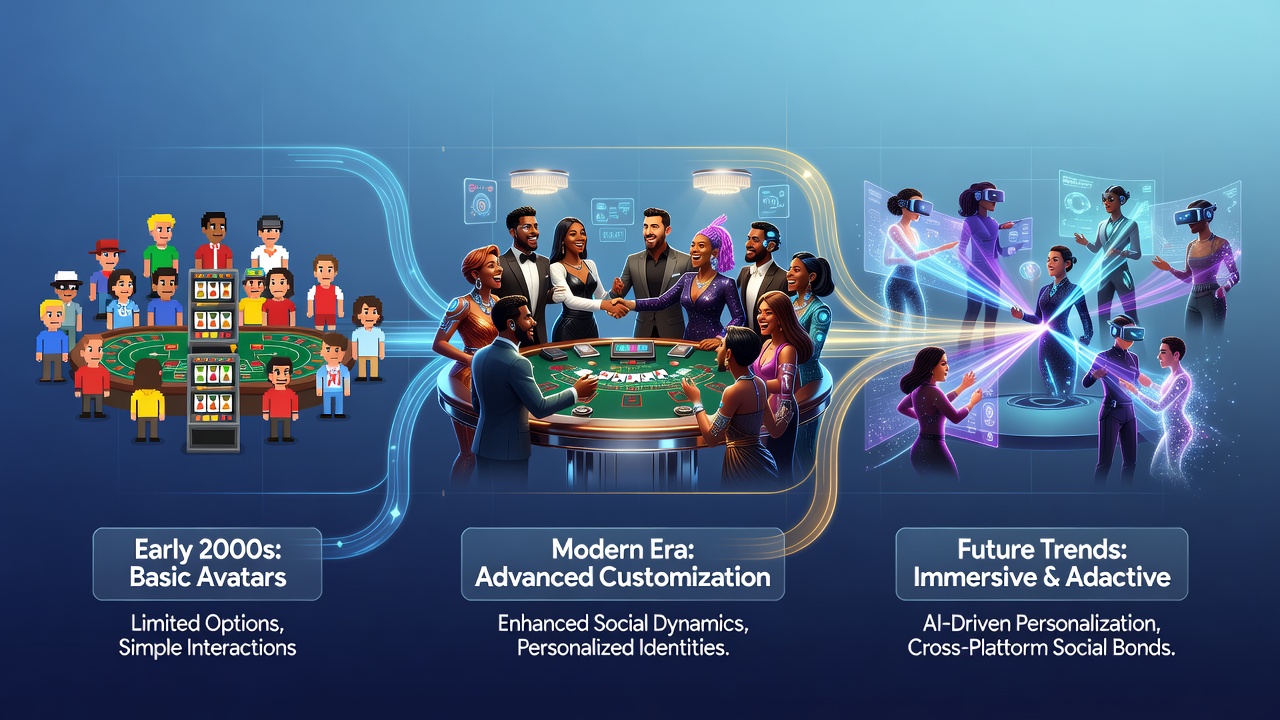
Virtual casino communities began with limited avatar options that consisted mainly of preset characters with minimal adjustments for appearance and players selected from a handful of stock images before entering digital tables or slot rooms. Researchers at institutions studying digital environments tracked how these early systems prioritized quick entry over personal expression, which resulted in uniform representations that reduced opportunities for immediate recognition among regular participants. Data from industry analyses indicate that by the mid-2010s platforms introduced sliders for height, skin tone, and basic accessories, allowing users to alter their on-screen presence in ways that reflected individual preferences during live interactions.
Expansion of Customization Features Through the 2020s
Platforms expanded these tools further as technology advanced, incorporating clothing layers, hairstyle variations, and animation sets that responded to in-game events such as wins or near-misses at virtual blackjack tables. Observers note that developers integrated marketplace systems where users acquired items through in-platform currencies or achievements, which created layered identities that evolved over months of participation. Figures from gaming trade reports reveal that customization depth increased participation metrics, particularly in communities where avatars appeared in shared lobbies and tournament brackets. Those who studied user behavior found correlations between detailed avatar edits and longer session durations, because players returned to refine their representations and display new acquisitions to others.
By 2023 several major virtual casino networks added cross-game compatibility so that an avatar customized in one title carried over to poker rooms or roulette streams with consistent visual traits and gesture libraries. This continuity strengthened group dynamics as members identified familiar figures across different environments without needing text labels or repeated introductions. Academic examinations of virtual social spaces documented how such persistence encouraged repeated collaborations, including team-based challenges where avatar style influenced invitation patterns from established cliques.
Effects on Social Dynamics and Player Recognition
Avatar customization directly shaped social interactions by providing visual cues that signaled experience level or group affiliation within casino communities. Players often selected specific color schemes or accessory combinations that aligned with known factions, which allowed quick assessments during high-stakes sessions without verbal exchanges. Evidence from platform analytics shows that users with highly customized avatars received more direct messages and friend requests compared to those using default settings, because distinctive appearances facilitated memory and follow-up conversations after tables closed.
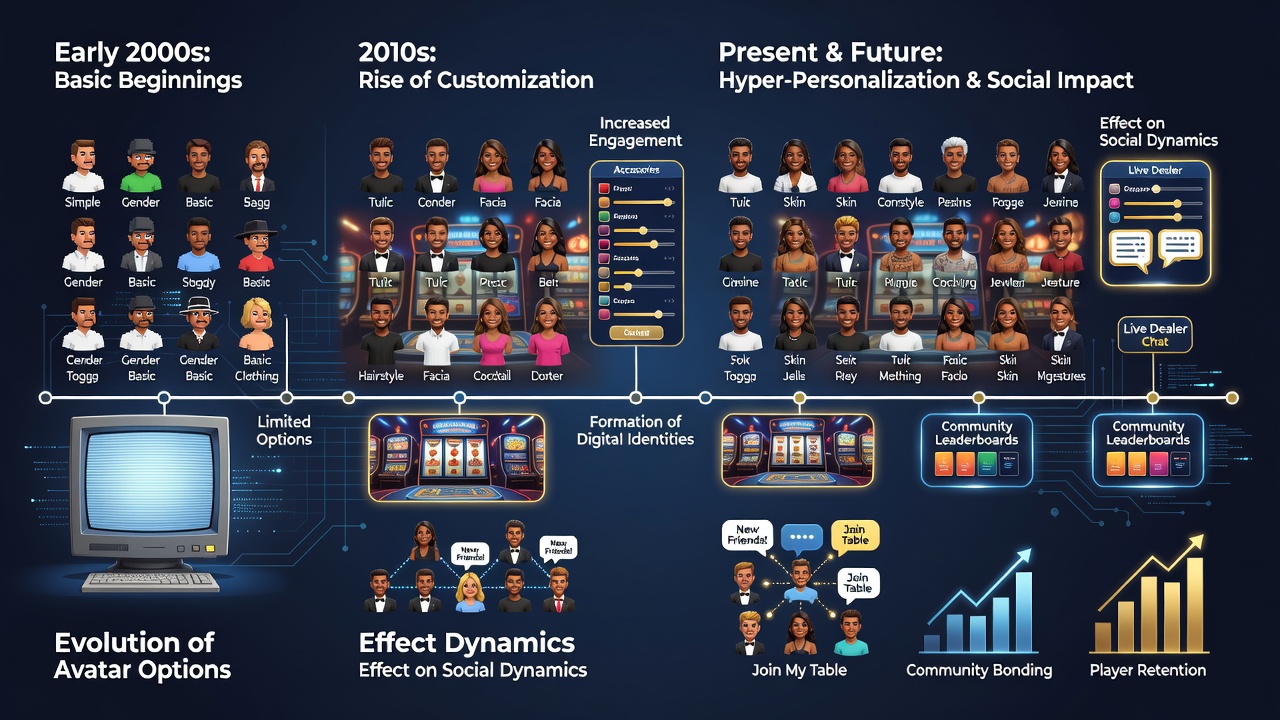
Studies conducted across European and North American markets highlight that advanced personalization reduced instances of mistaken identity during multi-table events, where dozens of participants shared the same virtual space. Community moderators reported fewer disputes arising from confusion over player identities once avatars featured unique movement patterns and branded items earned through loyalty programs. Data collected in early 2026 by regional gaming authorities, including reports referenced through the Interactive Gaming Association, demonstrate that these features supported higher retention in regulated markets operating across multiple jurisdictions.
Current Trends Observed in Mid-2026
Developments through July 2026 include integration of real-time lighting effects that adapt avatar appearances based on table outcomes, such as glowing accents after successful spins or subtle posture changes during losing streaks. These reactive elements add layers to interactions because other participants interpret visual signals as indicators of mood or strategy, prompting adjustments in betting behavior or chat volume. Industry organizations tracking digital entertainment note that mobile interfaces now support similar depth on handheld devices, enabling consistent customization across desktop and portable access points without loss of detail.
Regulatory bodies in Canada and Australia have begun reviewing how avatar data influences responsible gaming tools, because customized representations sometimes encourage extended play through emotional attachment to digital selves. Research papers from university departments focused on human-computer interaction present findings that players form stronger bonds with communities when their avatars receive compliments or recognition from peers, which in turn affects patterns of table selection and group formation. Platforms continue to refine privacy controls around these visual identities so that users manage visibility of certain custom items during public sessions.
Conclusion
Avatar customization in virtual casino communities has progressed from basic presets to sophisticated systems that carry visual and functional continuity across games while shaping recognition and collaboration among participants. Records maintained by trade groups and academic researchers confirm measurable impacts on interaction frequency and session patterns, particularly as features evolve to include responsive animations and cross-platform persistence. These developments remain tied to broader technological capabilities and regulatory oversight that continue to influence how players present themselves and connect within digital gaming spaces.