Fairmount Park Ignites 101st Racing Season with Half-Million Purse Surge in Collinsville
Written by Jordan Ludwig · Apr 15, 2026

Fairmount Park Ignites 101st Racing Season with Half-Million Purse Surge in Collinsville
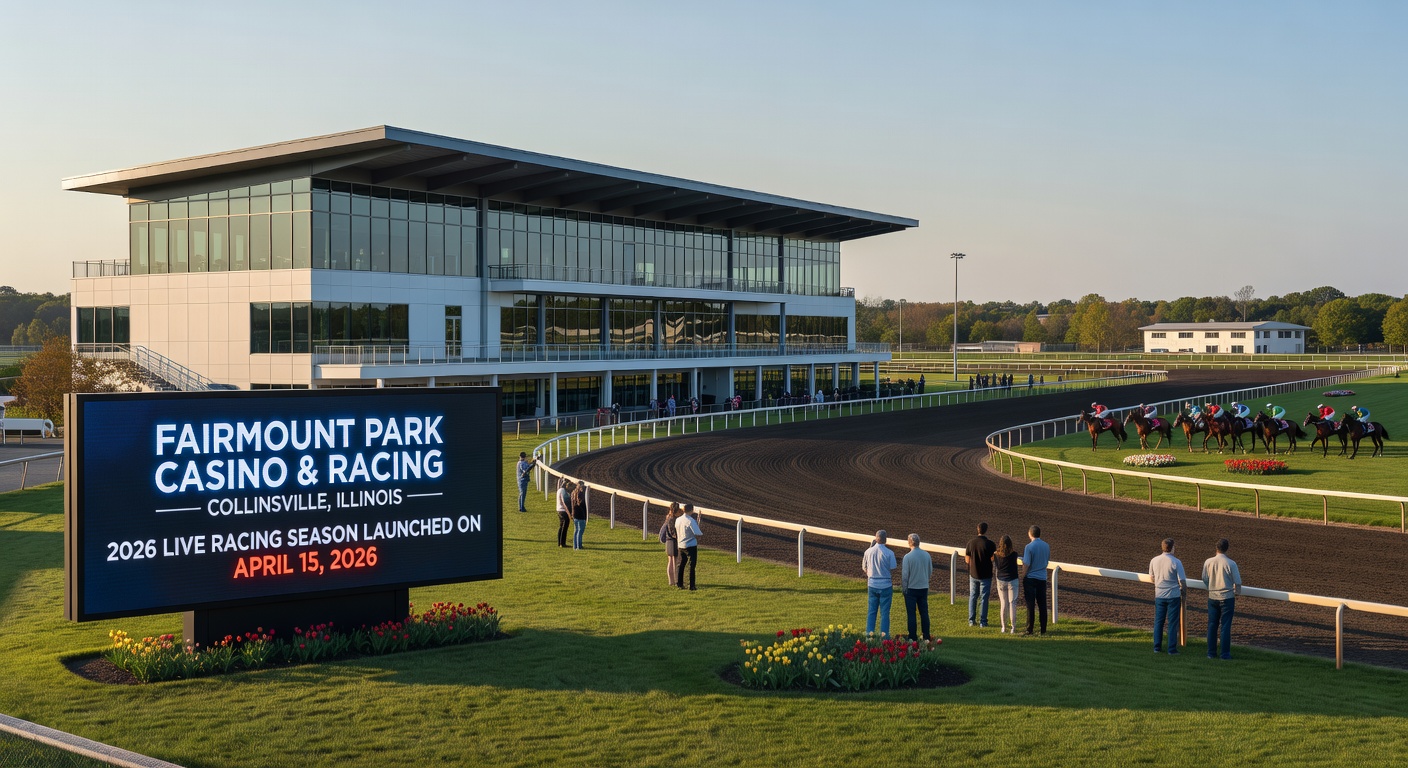
Fairmount Park Casino and Racing in Collinsville, Illinois, kicked off its 101st live racing season on Tuesday, April 14, 2026, drawing crowds eager for the thrill of the track; the venue boosted its total purse by $500,000, a strategic move designed to lure larger fields of horses, top-tier competitors from across the region, and attendance figures expected to surpass 5,000 on key race days.
The Launch That Signals a Strong Comeback
Now in its 101st year, Fairmount Park has long served as a cornerstone of Illinois horse racing, blending casino gaming with live thoroughbred action; this season's opener marked not just another start line but a deliberate ramp-up in stakes, as General Manager Vince Gabbert highlighted during the event, emphasizing how the purse increase positions the track to compete fiercely in a crowded Midwest racing landscape.
But here's the thing: while free admission keeps the gates wide open—races run Tuesdays and Saturdays at 1:30 p.m. through October 27—the real draw lies in those enhanced payouts, which experts in the racing industry have observed often translate to deeper fields and sharper competition, pulling in owners and trainers who chase the bigger rewards.
Take trainer Jim Watkins, whose comments captured the buzz around the launch; he noted the purse hike's potential to bring out seasoned pros and fresh talent alike, signaling to observers that Fairmount isn't just surviving but thriving amid evolving gaming trends.
Purse Power: How $500K Changes the Game
The $500,000 infusion into the purse pool isn't pocket change in horse racing terms; data from similar boosts at regional tracks, like those tracked by the Illinois Gaming Board, shows such increases routinely swell field sizes by 20-30%, as owners weigh the richer rewards against travel costs and entry fees.
What's interesting is how this plays out on the ground: larger fields mean tighter packs at the rail, more photo finishes, and that electric tension spectators crave; Fairmount's leadership banked on this formula, projecting attendance spikes beyond 5,000, especially as word spreads through breeding farms and training centers dotting the St. Louis metro area.
And since the season stretches all the way to October 27, consistent Tuesday-Saturday cards give fans plenty of shots at high-stakes drama, with free entry removing one more barrier for families and casual bettors looking to mix casino play with trackside excitement.
A Schedule Built for Steady Momentum
Races fire off at 1:30 p.m. sharp on Tuesdays and Saturdays, a rhythm that accommodates working folks and weekend warriors alike; this setup, running clean through late fall, allows for progressive wagering pools to build week by week, as carryovers from one card fuel the next.
Observers who've followed Fairmount's patterns point out that midweek races often uncover sleeper contenders—horses overlooked in bigger spots—while Saturday showdowns pack the house with high-rollers chasing the marquee events; community enthusiasm, as echoed in Gabbert's remarks, underscores this reliability, turning the track into a seasonal ritual for Collinsville locals.
Yet the purse escalation adds a layer: top-tier competitors, drawn by the upgraded money, elevate every card, making even routine afternoons feel like stakes races; that's where the rubber meets the road for a venue like Fairmount, balancing casino revenue with racing's pure adrenaline.
Voices from the Paddock: Gabbert and Watkins Weigh In
General Manager Vince Gabbert stepped up at the opener to frame the purse boost as a direct response to fan feedback and industry shifts; he detailed how the extra $500,000 spreads across the season's cards, targeting allowance races and claimers where the impact hits hardest for mid-level owners.
Trainer Jim Watkins, a familiar face at Fairmount, chimed in with a horseman's perspective; he observed that bigger purses mean healthier fields, which in turn sharpens the overall product—fewer scratches, more reliable post times, and betting menus that keep the tote board lighting up.
These insights align with patterns seen elsewhere; for instance, reports from the National Thoroughbred Racing Association indicate that purse hikes correlate with a 15% uptick in handle, as bettors flock to races promising elite matchups.
Community Roots and Broader Ripples
Collinsville's embrace of Fairmount runs deep, with locals turning out not just for the races but the full experience—casino floors humming alongside the track's roar; the 2026 launch tapped this vein, as free admission invites everyone from first-timers to die-hards, fostering that communal pulse so vital to smaller ovals.
So while the purse news dominates headlines, the season's structure supports steady growth; Tuesdays draw the dedicated, Saturdays swell with out-of-towners, and by October, playoff-like atmospheres emerge as horsemen vie for year-end honors.
People who've studied regional gaming economics note how venues like Fairmount bridge horse racing's traditions with modern casino ops, creating jobs and tax revenue that loop back into Illinois communities; attendance projections topping 5,000 reflect this synergy, especially as word of the purse surge ripples through social feeds and breeding syndicates.
Behind the Scenes: What Makes Fairmount Tick
Established patterns at the track reveal a venue that's weathered industry headwinds—consolidations, off-track betting shifts—yet persists through local loyalty and smart investments; this 101st season, with its April 14 start, builds on recent gains, as the $500,000 commitment signals confidence from ownership.
Turns out, enhanced purses don't just fill gates; they sustain the ecosystem, from vets and farriers to feed suppliers dotting the Midwest; Watkins alluded to this in his comments, praising how Fairmount's moves keep trainers stabled year-round rather than chasing distant circuits.
And for spectators, it's straightforward: show up free, grab a program, and watch as deeper fields deliver the chaos and triumphs that define live racing—photo finishes, longshot bombs, wire-to-wire dashes—all amplified by the stakes now on the line.
Looking Ahead: A Season Poised for Peaks
As the calendar flips toward May, Fairmount's Tuesday-Saturday cadence promises escalating action; larger fields from the purse draw mean unpredictability baked in, with top competitors testing their mettle against regional rivals.
Gabbert's optimism, paired with Watkins' track-level view, paints a picture of momentum; community turnout, expected to eclipse those 5,000 marks, hinges on delivering those barn-burning finishes week after week.
Conclusion
Fairmount Park's 2026 launch on April 14 encapsulated a pivotal moment for Collinsville racing, as the $500,000 purse boost ignited the 101st season with promises of packed fields, elite clashes, and crowds pushing past 5,000; free entry Tuesdays and Saturdays at 1:30 p.m. through October 27 ensures accessibility, while voices like Gabbert and Watkins affirm the strategy's soundness.
In the end, this isn't just about one opener—it's a full slate crafted to sustain excitement, reward horsemen, and cement Fairmount's role in Illinois' gaming tapestry; observers will watch closely as the season unfolds, tracking whether those projections hold and the track solidifies its resurgence.